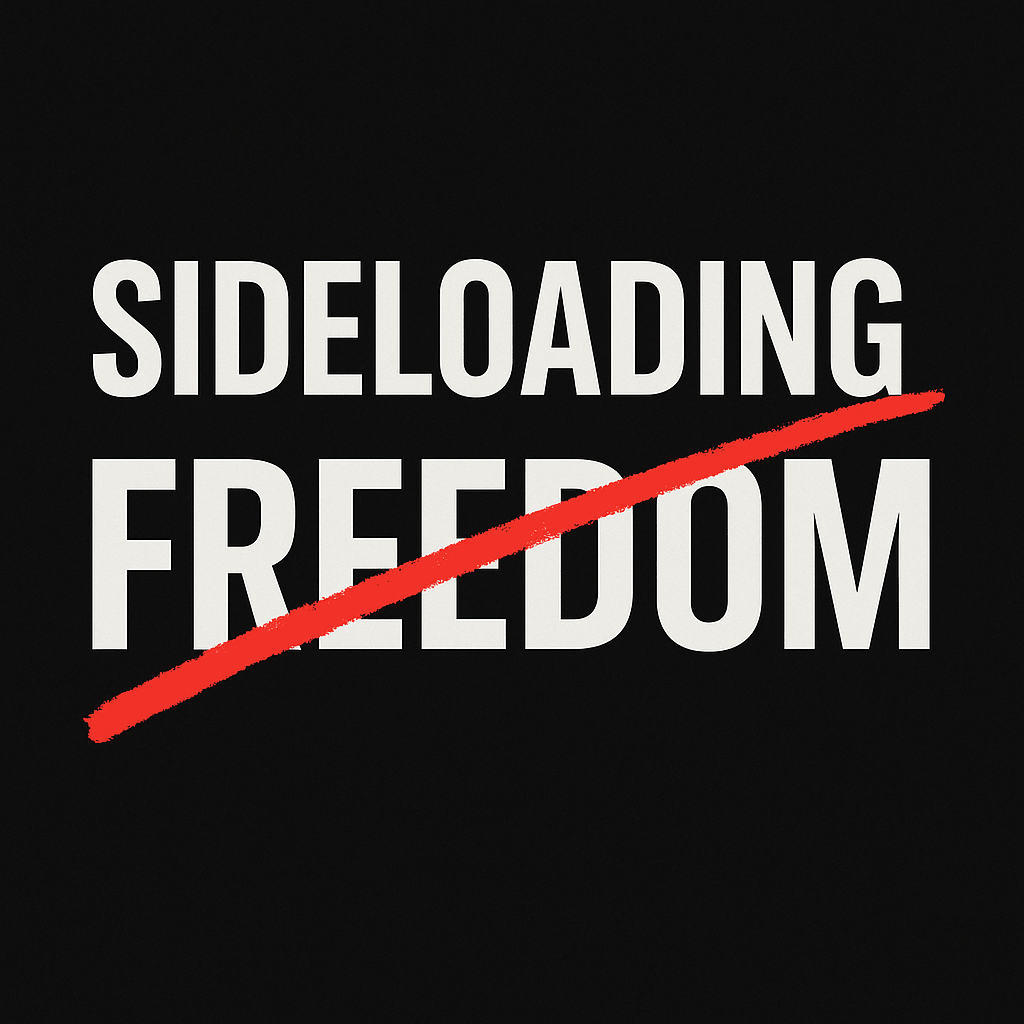
The End of True Sideloading
How Google Is Tightening Its Grip on Android
For years, sideloading — the ability to install apps outside of official app stores — has been one of Android’s defining features. It’s what set the platform apart from Apple’s closed ecosystem, giving users the freedom to choose where their software comes from and how they use their devices.
That freedom, however, is about to change.
According to a recent F-Droid article, Google’s new policies will soon make it impossible to install apps that haven’t been pre-approved through its registration systems. In other words, sideloading as we know it will be replaced with a "managed installation" model — one where every app must be part of Google’s controlled ecosystem.
A Shift From Freedom To Control
This change is being framed as a security improvement, but it raises fundamental questions about digital sovereignty. If every app has to be “verified” through Google’s channels, then users effectively lose the ability to make independent decisions about what software they trust or use.
Projects like F-Droid, which champion open-source, privacy-respecting apps, could be severely impacted. Developers who distribute apps independently — outside of Play Store policies or monetization structures — may find themselves locked out entirely.
The Bigger Picture
What’s happening isn’t just about Android. It’s part of a broader industry shift toward closed ecosystems and controlled user experiences. By restricting sideloading, Google is limiting not only user freedom but also innovation, competition, and transparency.
For those who value openness, privacy, and true digital ownership, now is the time to pay attention.
As F-Droid emphasizes, sideloading isn’t a loophole — it’s a fundamental right of computing freedom. Losing it means ceding more control over our devices, data, and choices to corporate gatekeepers.
Read more at the link below:
🔗 f-droid.org/en/2025/10/28/sideloading.html